
Yellow Jackets
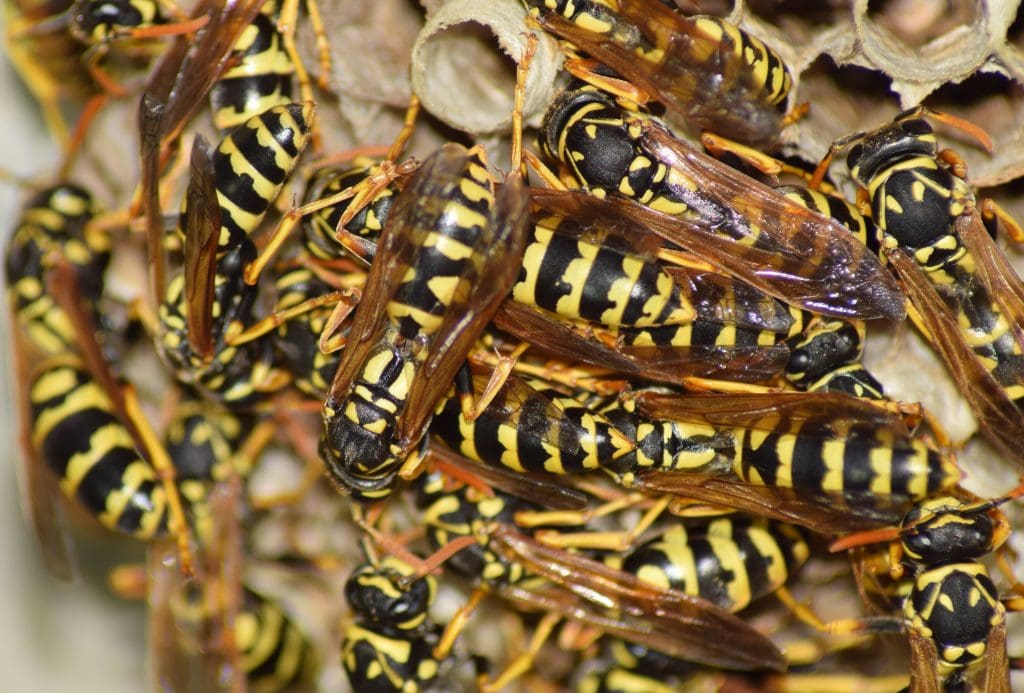
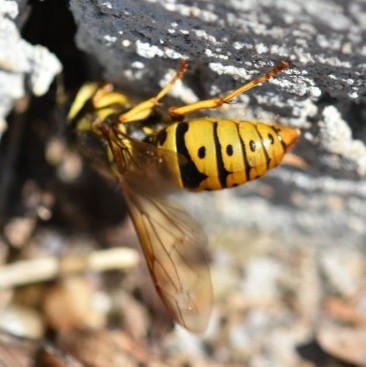
Yellow jackets are usually black and yellow with alternating bands or markings on the abdomen. Workers are approximately 3/8”–5/8” long and have a smooth, slender, wasp-like body (unlike bees, yellow jackets have very little body hair). They have a narrow “waist” between the thorax and abdomen. A distinctive feature is yellow jackets are often confused with bees, but they have a sleeker body and brighter yellow-and-black markings.
Yellow jackets are social wasps that live in colonies with a queen and many workers. They are most active in late summer and early fall when colonies reach their largest size. During this time, colonies may contain thousands of workers. Yellow jackets feed on sugary foods, protein sources and are commonly seen around outdoor gatherings, picnic areas, trash cans, recycling bins, grills and outdoor kitchens.
As natural food sources become less available in late summer and fall, yellow jackets may become more noticeable around people and food. They are territorial near their nests and will aggressively defend their colony if threatened.
Yellow jackets build paper-like nests by chewing plant fibers and mixing them with saliva to create paper carton material. The nest entrance is often a small opening with frequent traffic of workers entering and exiting. Some species build visible aerial nests, while others are primarily ground nesters.
Facts:
- Yellow jackets are capable of stinging multiple times because their stinger is not barbed like a honeybee’s.
- They may release alarm pheromones when threatened, signaling other colony members to defend the nest.
- Unlike many bees, yellow jackets can be aggressive when protecting their colony.
Bald-Face Hornets
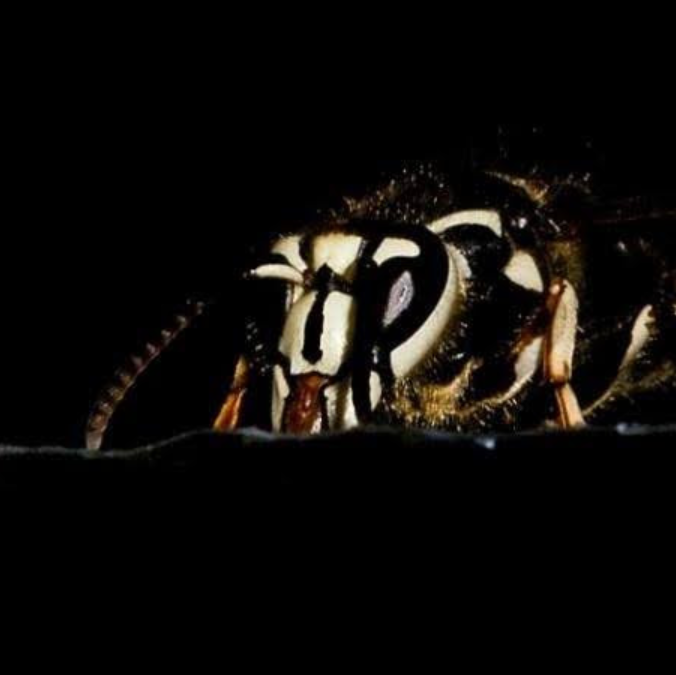
Bald-face hornets have a black body with distinctive white markings, especially on the face, legs, and end of the abdomen
Size: Workers are approximately 1/2”–5/8” long; queens can reach approximately 3/4” long. They have long, slender, wasp-like bodies with narrow waists. Their mostly black bodies and white facial markings make them easy to distinguish from many other stinging insects.
Bald-faced hornets are social wasps that live in colonies made up of a queen and hundreds of workers. They are most visibly active during the daytime, when workers leave the nest to search for food and defend the colony. They are typically noticed in late summer and early fall when colonies reach their peak size. Colonies can contain hundreds of workers by the end of the season.
Bald-faced hornets are highly defensive of their nests and may attack when they feel threatened. They can sting repeatedly because their stinger is not left behind after use. When disturbed, they can release alarm pheromones that signal other colony members to defend the nest.
Bald-faced hornets construct large, enclosed paper nests made from chewed wood fibers mixed with saliva. Nests are typically located at least several feet above the ground, often in open areas where workers can easily defend them. The large, gray, football-shaped nests may contain multiple layers of comb inside. Colonies do not reuse old nests. At the end of the season, the colony dies off and only newly mated queens survive to start new colonies the following spring.
Fun Fact: Despite their name, bald-faced hornets are not true hornets — they are a species of aerial yellow jacket.
Paper Wasps
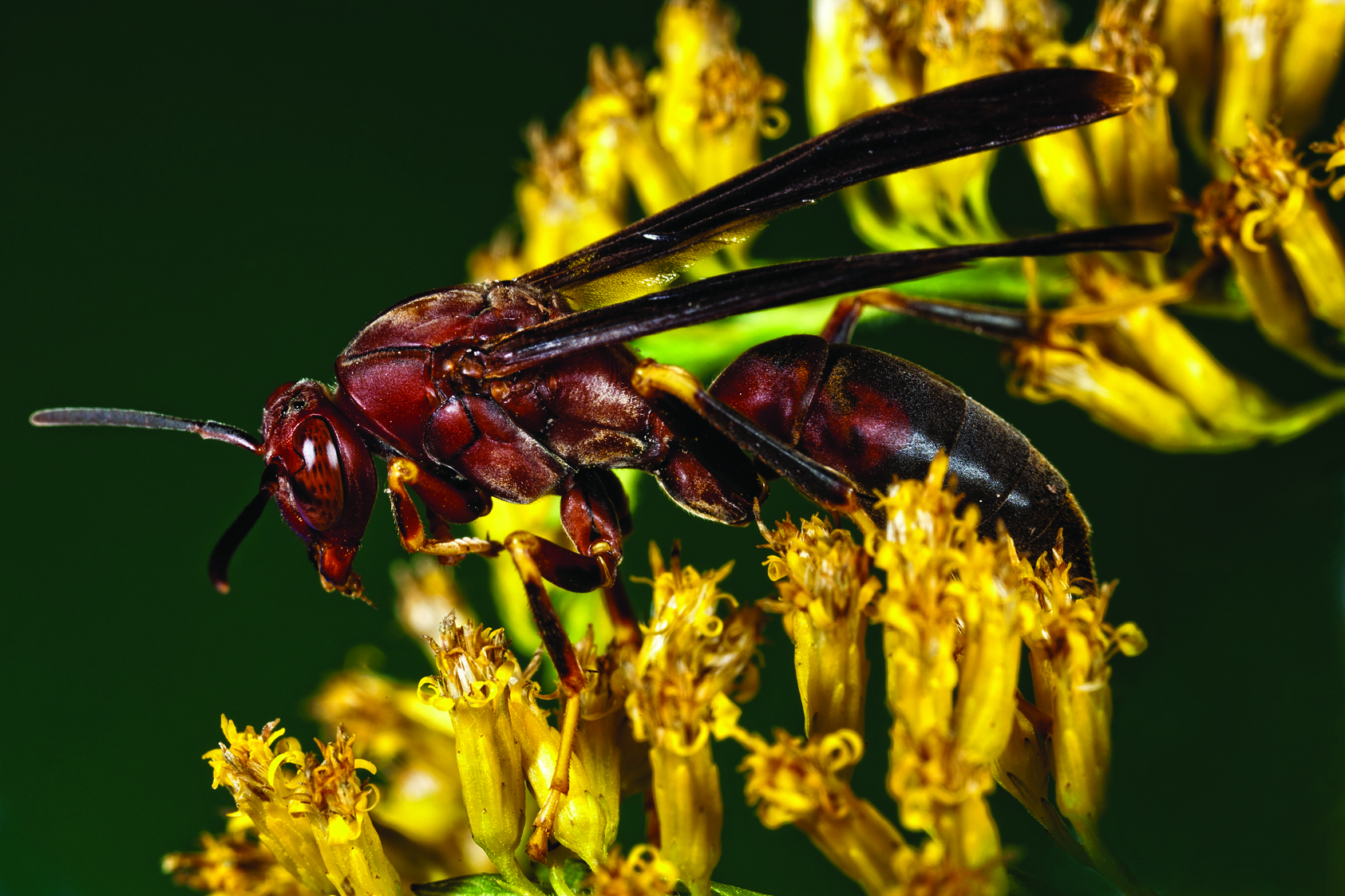
These brown or reddish-brown insects have yellow markings; some species may have reddish or orange coloring. They are approximately 5/8”–3/4” long and have a slender, wasp-like body with a narrow waist and noticeably long legs that often hang down while flying. Their long legs and slow, graceful flight pattern help distinguish them from other stinging insects.
Paper wasps are social wasps that live in colonies started by a queen. Because they prey on other insects, paper wasps can be beneficial in gardens and landscapes by helping control pest populations. Activity begins in the spring and continues through late summer and early fall.
In the autumn, newly developed queens leave the nest to find protected places to overwinter.
Paper wasps are generally less aggressive than yellow jackets, but they will defend their nest if they feel threatened or if the nest is disturbed. Paper wasps build distinctive open-comb nests made from chewed wood fibers mixed with saliva. Their nests consist of exposed, uncovered cells where eggs are laid. Unlike yellow jackets and bald-faced hornets, paper wasp nests do not have a protective outer paper covering. Nests are not reused the following year; new colonies build new nests each season.
Fun Fact: Paper wasps are sometimes called “umbrella wasps” because of the shape of their open, umbrella-like nests.
Carpenter Bees
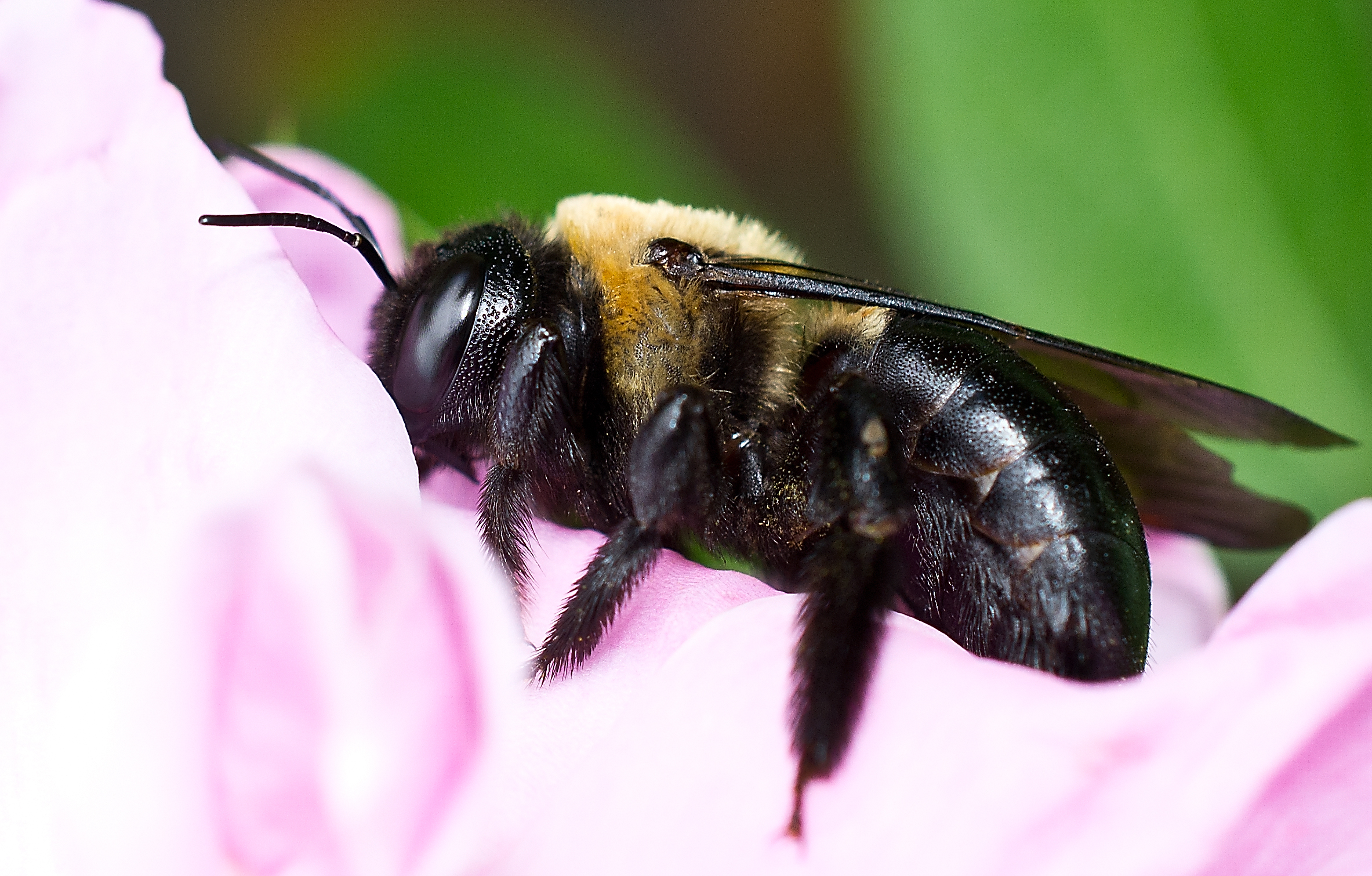
Carpenter bees are usually black, with some species having yellow or orange hair on the thorax. They’re approximately 1/4”–1” long (depending on species) with six legs. These large, oval-shaped bees have a robust body similar in size and appearance to bumble bees. The upper surface of the abdomen is typically smooth and shiny, while bumble bees usually have a fuzzy abdomen covered with hair.
Carpenter bees do not eat wood. Instead, they excavate tunnels in wood to create nesting galleries where they raise their young. Female carpenter bees use their strong jaws to drill perfectly round entrance holes, typically about 1/2 inch in diameter.
Male carpenter bees are often the ones homeowners notice because they aggressively hover and patrol near nesting areas. Male carpenter bees cannot sting because they do not have stingers. Female carpenter bees can sting, but they are generally docile and only sting when handled or directly threatened. Carpenter bees are important pollinators and play a valuable role in the ecosystem.
Carpenter bees are solitary insects, meaning they do not live in large colonies like honeybees or yellow jackets. Each female creates her own nesting tunnel inside wood. Nest tunnels may contain several individual chambers where eggs are laid, and food is stored for developing larvae.
Carpenter bees often return to the same nesting sites year after year, expanding old tunnels and increasing damage over time.
Fun Fact: Carpenter bees are often mistaken for bumble bees because of their size and appearance.
Honeybees
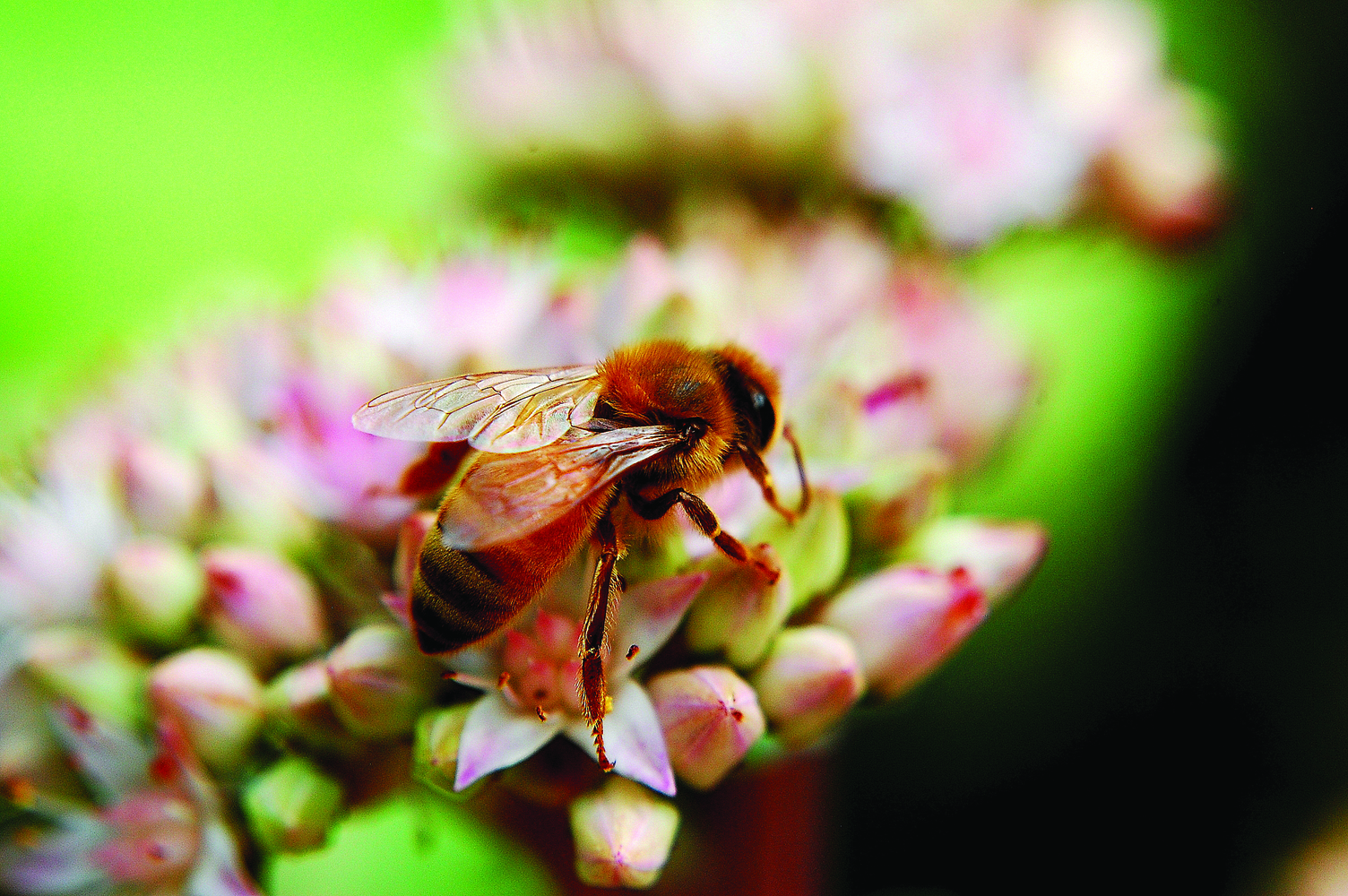
Honeybees are golden-yellow to amber with brown bands; some bees may appear darker or more orange brown and are approximately 1/2” long with six legs. They have an oval-shaped body with the classic bee appearance.
Honeybees are covered in fine hairs that help collect pollen. Their hind legs have special structures called pollen baskets (corbiculae) used to carry pollen back to the hive.
Honeybees are social insects that live together in large colonies organized around a queen. Their colonies may contain tens of thousands of bees during peak seasons. And swarm primarily when the colony becomes too large for the available hive space, the colony produces a new queen, or the existing queen leaves with part of the colony to establish a new hive.
A swarm is a natural part of honeybee reproduction and does not mean the bees are attacking. Swarms typically gather temporarily on tree branches, fence posts, outdoor structures, and other protected locations. A swarm may remain in place for approximately 24–48 hours while scout bees search for a permanent nesting location.
Honeybees in a swarm are generally very docile because they are not protecting honey stores, young, or an established hive. Honeybees away from the hive are unlikely to sting unless they feel directly threatened. Guard bees at an established hive entrance can become defensive and may sting if they believe the colony is in danger. Unlike many wasps, honeybee colonies may survive for many years if conditions are favorable.
Stinging Behavior:
Honeybees can sting only once because their barbed stinger becomes lodged in mammal skin and is pulled from their body after stinging. Only worker bees have barbed stingers; queens have a smooth stinger and can sting multiple times but rarely do. Honeybees release an alarm pheromone after stinging that can alert other bees to danger.
Fun Fact: Honeybees are different from many wasps because their bodies are fuzzier and designed for collecting pollen.
Bumble Bees
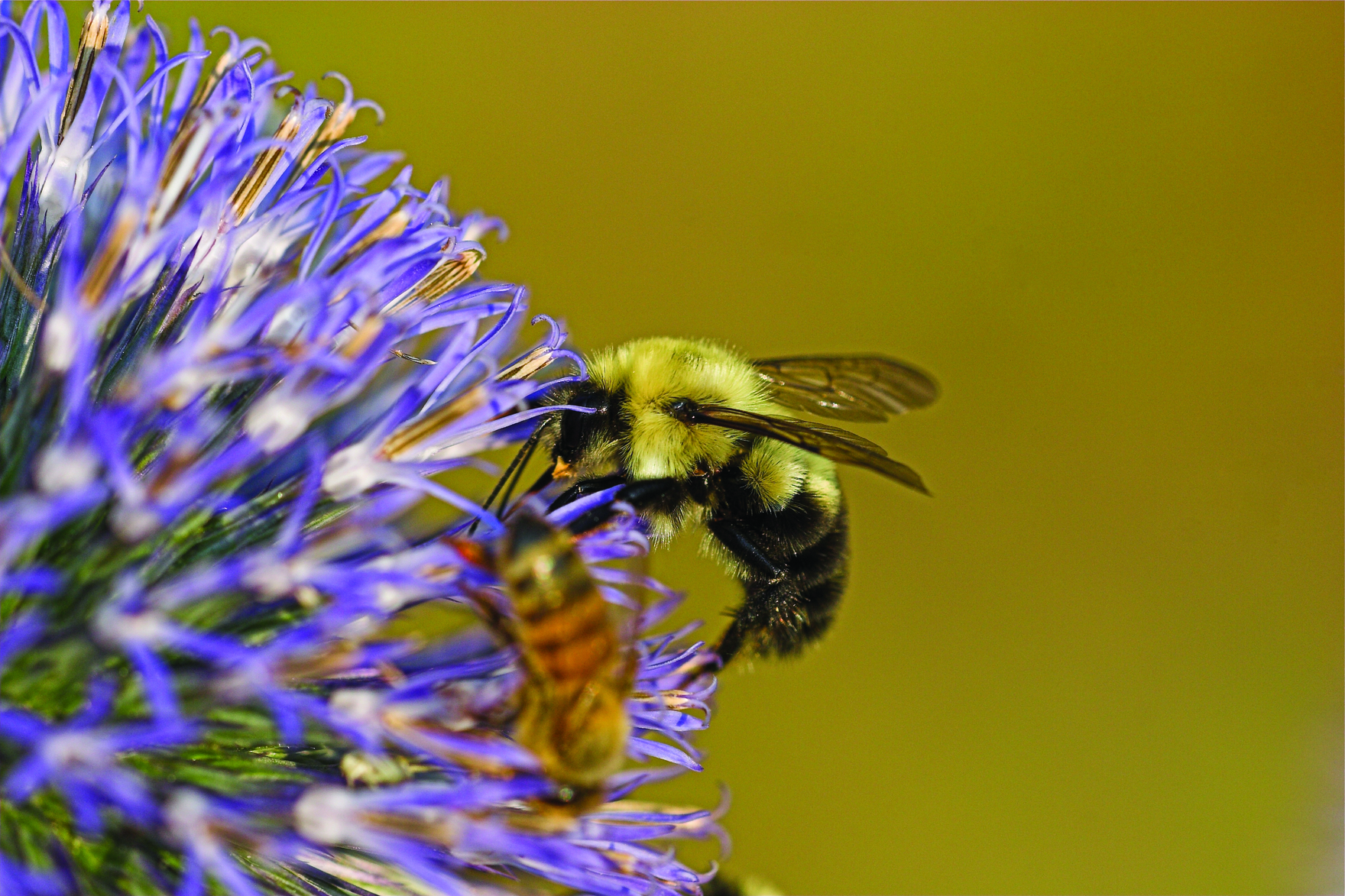
Bumble Bees are usually black with yellow markings; some species may have orange, white, or reddish markings. They’re approximately 1/2”–1” long depending on species and caste. Bumble Bees have a large, oval-shaped body with a round, fuzzy appearance. Bumble bees have hairy bodies, including a fuzzy abdomen, which help them collect pollen.
Bumble bees are generally gentle and less aggressive than many other stinging insects. They are important pollinators and play a major role in helping plants reproduce. Unlike honeybees, bumble bees do not produce large amounts of honey because their colonies are smaller and usually only last one season. Bumble bees are social insects that live in colonies, but their colonies are much smaller than honeybee colonies.
Bumble bees are most active during the warmer months and are commonly seen foraging on flowers. They may become defensive if their nest is disturbed.
Bumble bees usually build nests in sheltered areas, often using existing spaces rather than creating their own structures. Unlike honeybees, bumble bees do not reuse the same nest year after year. At the end of the season, the colonies die off and only newly mated queens survive the winter to start new colonies in spring.
Stinging Behavior:
Bumble bees can sting more than once because their stinger is smooth and does not become detached. Only females (queens and workers) can sting. Males cannot sting because they do not have stingers. Bumble bees typically sting only when they feel threatened or their nest is disturbed.
Fun Fact: Bumble bees are often confused with carpenter bees, but carpenter bees typically have a smooth, shiny abdomen, while bumble bees have a fuzzy one.
